My airport driver needs my flight number. Who needs the rest of the email?
An airport pickup shows how much personal data an AI booking service really needs, and what to ask before sharing a family itinerary.
A JOURNAL OF PERSPECTIVE
Progress gives us possibilities.
Perspective helps us choose.
Notes on health, money and the future—exploring what is changing, what we may have overlooked, and what it could mean for our lives.
TURN THE PERSPECTIVE
If we can detect more, what should we do differently?Fresh questions. Considered perspectives.
An airport pickup shows how much personal data an AI booking service really needs, and what to ask before sharing a family itinerary.
The firm is licensed. How do you check whether the person who sent the offer represents it?
What melanoma patients and investors can each learn from the same trial.
A pharmacy reading, a kaya toast excuse and one question to ask before you leave.
Three siblings split Mum’s clinic bill. What about the half-day’s pay her daughter gave up to take her?
A parent can keep the value of an investment private and still tell the family which broker to call.
Two parents can have the same EPF balance and very different room to give. What i-Legasi changes for EPF, for families and for your own retirement.
The reasoning behind Solve Everything, two real research examples, and what I take from a hopeful—but uncertain—medical future.
A fake interview was one entry point. My takeaway: security should allow for human mistakes and limit how far one breach can spread.
Humanoid robots invite us to imagine a future with more independence, better support—and perhaps someone else doing the washing-up.
Manufactured organs could expand our options. What separates a scientific breakthrough from a treatment a particular family can actually access?
Google Cloud revenue doubled, yet Alphabet shares fell. A closer look at growth, expectations and the cash needed to build AI’s future.
ER-100 brings new hope for restoring function. How should we think about longer lives when healthy years and care needs remain uncertain?
MediAsas invites a better comparison: what costs would a plan carry, what would our household retain, and could we sustain both through a difficult year?
A legacy needs a workable handover as well as valuable assets. Who could access cash, with what authority, and when?
AlphaGenome Atlas offers more promising research clues. My view on separating faster discovery from better outcomes—and asking who will be ready to benefit.
Earlier cancer detection offers a hopeful possibility: more time to understand, prepare and explore our options. What would help us make that time count?
A NOTE FROM THE EDITOR
“I’m interested in a brighter future.
And the questions that help us prepare for it.”
Hope and preparation belong in the same conversation. This journal makes room for both.
A little more about Risk Steward ↗Technology & Society
AI can help us finish an email. I am rather more interested in whether it can help scientists understand a disease. AlphaGenome Atlas offers an encouraging glimpse of that possibility—and a useful reminder to ask what each breakthrough actually changes.
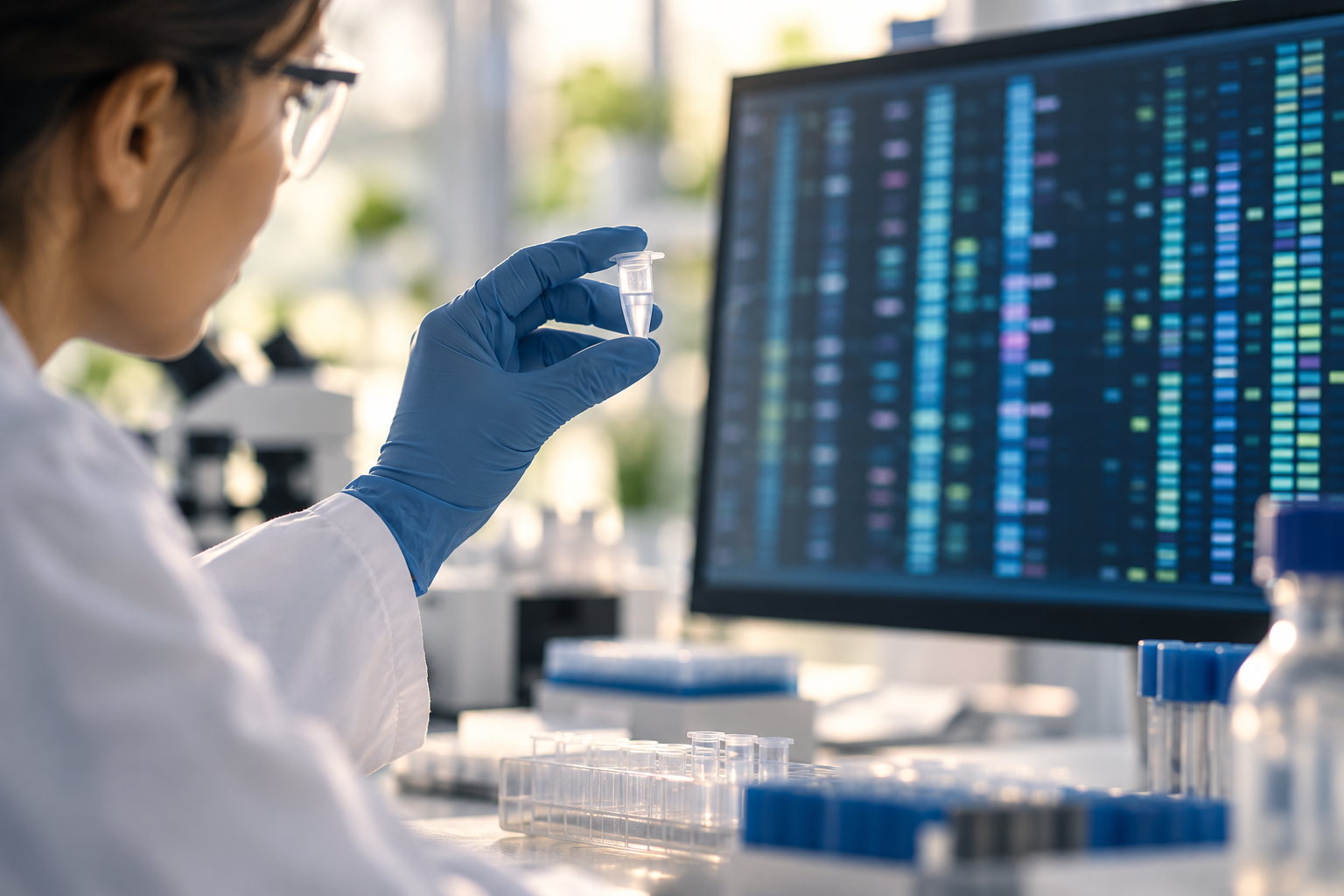
In September 2026, Google DeepMind introduced AlphaGenome Atlas, a resource containing predictions for around 9 billion possible single-letter changes in human DNA. It helps researchers identify which changes may matter most and investigate their potential effects. These are predictions to guide research—not nine billion completed experiments. [1]
Imagine searching for the cause of a rare condition among thousands of possible genetic changes. A tool that helps narrow the list can direct precious time, expertise and laboratory resources towards the most promising leads.
There are already encouraging examples. Google reports that Broad Institute researchers used Atlas to highlight a previously overlooked variant affecting the DNM1 gene. Experiments then supported the predicted disruption. In a separate analysis involving more than 54,000 UK Biobank participants, a researcher identified 22% more non-coding genetic associations using predictions to group variants. [2]
That does not mean 22% more cures. It means researchers found additional clues—and clues are where better understanding begins. The reports do not establish a universal number of hours or years saved by Atlas.
9 billion
possible single-letter DNA changes with predicted effects
54,000+
UK Biobank participants in one reported analysis
+22%
non-coding genetic associations identified in that analysis
More research clues—not 22% more cures. AI predictions help prioritise variants. Laboratory validation and clinical research remain essential. These reports do not quantify a universal time saving.
Source: Google DeepMind, 8 September 2026. Reported research applications, not demonstrated treatment outcomes.
What makes me optimistic is the possibility of moving from a difficult question to a useful lead more efficiently. A better map can help scientists choose where to look. It cannot tell a family that a treatment will be ready by next Tuesday.
A discovery still has to become a treatment that works safely in people. Laboratory research, clinical studies and regulatory review remain essential. [3]
For me, this challenges an easy assumption: that faster discovery automatically means better outcomes for everyone. I would separate three milestones—finding a clue, demonstrating a treatment benefit, and making that treatment accessible. Progress at one is welcome; it does not settle the others.
As possibilities change, our questions can change too. What evidence would make a new option relevant to us? What would access involve? Which health and family arrangements still need to work while we wait? These are questions to revisit, not reasons to put today’s decisions on hold.
Cures for all diseases remain an ambition, not a forecast. Still, I look forward to a future in which fewer families hear, “There is nothing more we can do.”
I am happy to be optimistic about tomorrow. I just would not give today’s responsibilities the day off.
Sources checked: 1 November 2026. General education and personal commentary, not medical advice.
[1] Google DeepMind: AlphaGenome Atlas
[2] Google: Reported research applications
[3] FDA: Drug development process
A QUESTION TO CARRY FORWARD
Original article ↗